
Ground That Drains and Supports Properly
Land Grading in Monroe for properties with water pooling, uneven yard surfaces, and drainage failure patterns
Georgia clay soil holds water differently than sandy or loamy ground, which means improper slope on residential lots often leads to standing water that takes days to clear after heavy rainfall. American Grading & Hardscapes handles land grading in Monroe for homeowners dealing with yard flooding, foundation moisture concerns, and uneven terrain that limits how outdoor space can be used. Properties across this region frequently show drainage issues tied directly to inadequate or incorrectly established grade during initial construction.
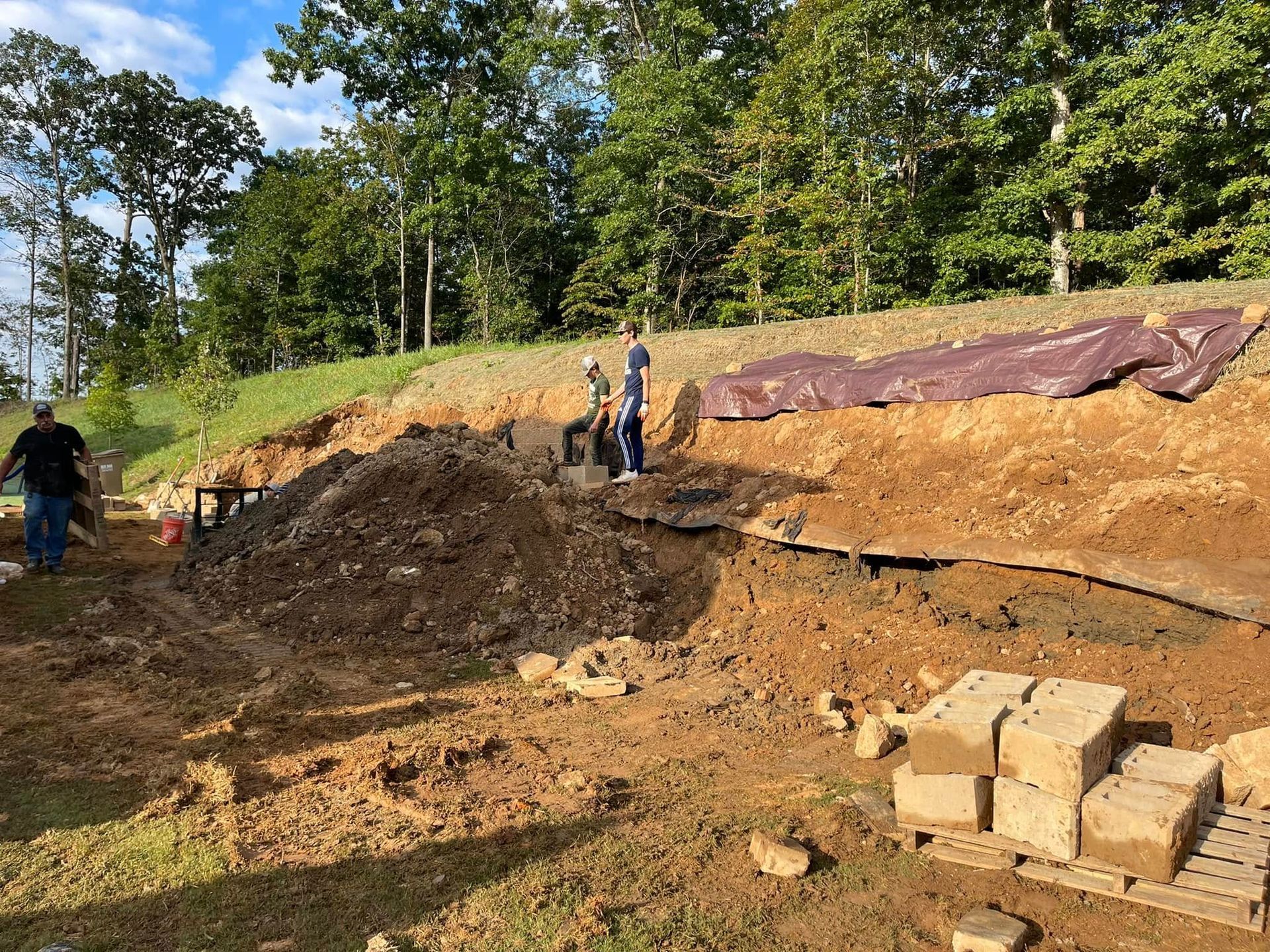
Land grading adjusts the slope and surface contours of your property to control where water moves, how quickly it leaves the yard, and whether it flows toward or away from structures. The service addresses erosion on hillsides, water pooling near foundations, driveway runoff problems, and uneven yard surfaces that create unusable low spots. Correcting grade involves removing high points, filling depressions, and establishing precise slopes that direct water to appropriate drainage outlets or street systems.
Request a grading evaluation to determine the slope corrections needed for your specific property layout.
How Slope Correction Addresses Water Movement
Professional grading equipment creates consistent slope gradients measured in inches of drop per linear foot, which determines how effectively water moves across your yard. The process involves laser-guided or GPS-assisted grading machines that establish precise elevations across the entire work area, cutting high sections and redistributing soil to low areas until the target slope is achieved. Georgia clay requires compaction in layers after fill placement to prevent future settling that would undo the drainage improvements.
After grading is complete, you'll notice water no longer collects in specific yard areas after storms, runoff moves visibly away from the foundation, and previously soggy sections of the lawn dry out within hours instead of remaining saturated for days. The yard surface appears level to the eye in most cases, even though a controlled slope of one to two percent has been established to manage drainage flow. Driveways and walkways connect to yard grade without abrupt transitions or pooling at edges.
Site preparation grading differs from finish grading—the first establishes rough elevation and drainage paths for construction projects, while the second creates the final surface ready for sod, landscaping, or hardscape installation. Both require different equipment passes and compaction standards. Grading also reveals subsurface obstacles like rock layers or old construction debris that may need removal before final surface work.
Why Choose Vibrant Tree Services for Stump Grinding?
With Vibrant Tree Services, you can trust that every stump removal is done safely, efficiently, and with attention to detail — leaving your yard looking vibrant and refreshed.
Questions About Grading Work
Homeowners preparing lots for construction or addressing existing drainage problems typically want to know how grading changes their property and what the process involves.
American Grading & Hardscapes evaluates existing site conditions and establishes grading plans based on your property's current elevation, soil composition, and drainage requirements. Arrange an on-site assessment to identify the slope corrections that will address water management concerns on your lot.
What slope is needed for proper drainage around homes?
Most residential grading requires a minimum two percent slope for the first ten feet from the foundation, which translates to roughly two and a half inches of drop, though steeper grades may be necessary depending on yard conditions and soil type.
How does clay soil in Monroe affect grading work?
Clay compacts tightly when dry but expands and becomes slippery when saturated, so grading schedules often depend on recent rainfall, and compaction techniques must account for clay's tendency to hold moisture longer than other soil types.
When should grading happen relative to other site work?
Rough grading occurs before construction or hardscape installation to establish drainage patterns and building pad elevations, while finish grading happens after heavy equipment work is complete and immediately before landscaping or sod installation.
What equipment is used for residential lot grading?
Grading typically involves skid steers for smaller areas and compact track loaders or bulldozers for larger lots, along with laser or GPS systems that guide operators to exact elevations across the property.
Why do some yards develop drainage problems years after construction?
Soil settles over time, especially in areas where fill was placed without adequate compaction, and erosion gradually changes surface contours, both of which can redirect water flow toward foundations or create new low spots that weren't present initially.