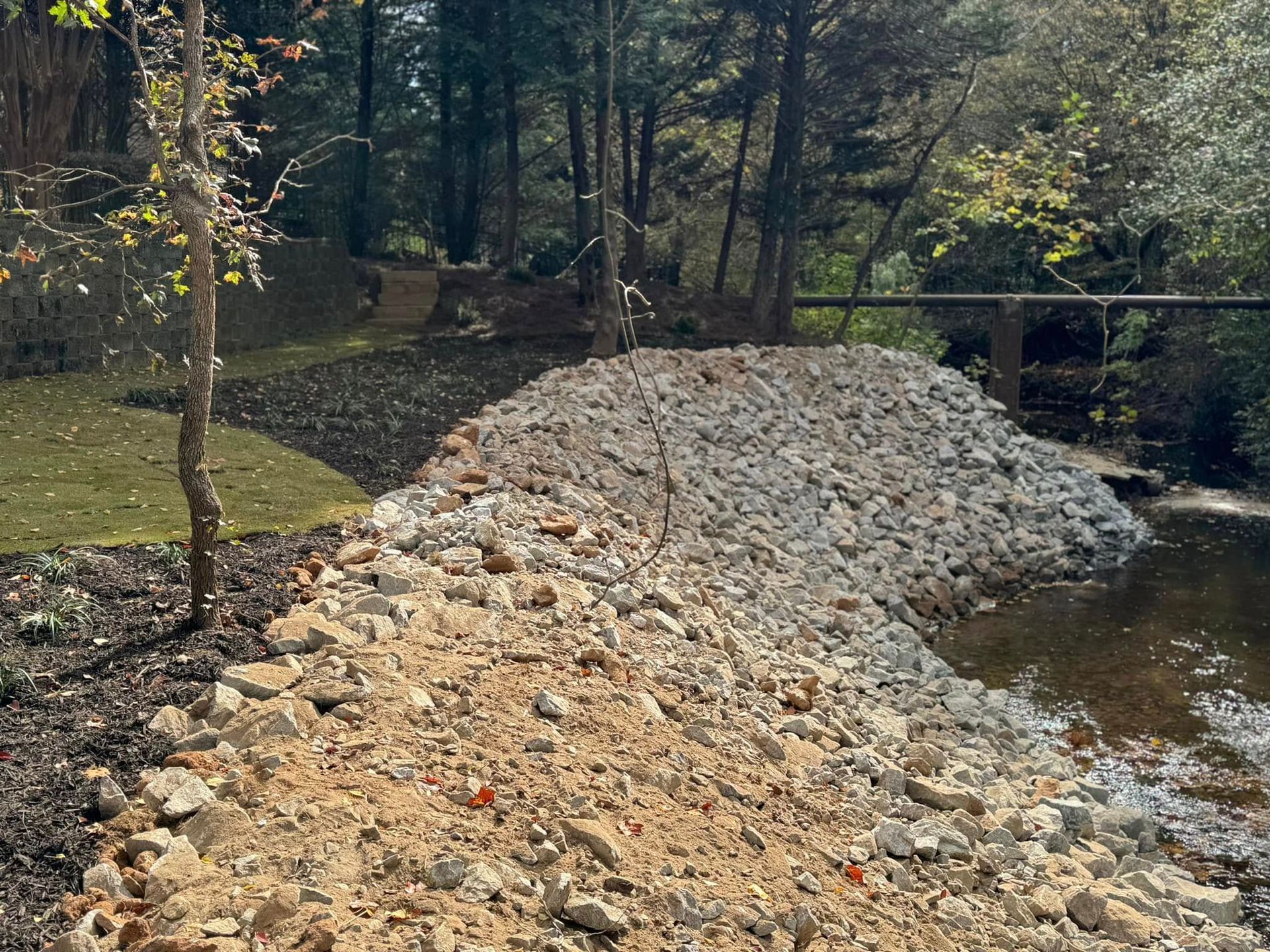
Water Redirected Away from Structures
Drainage Solutions in Monroe for yards with standing water, foundation moisture problems, and erosion from uncontrolled runoff
Heavy Georgia rainfall overwhelms inadequate drainage systems within minutes, leaving water pooled in low yard areas, flowing toward foundations, or carving erosion channels across slopes. Homeowners throughout Monroe deal with these recurring water issues because many properties were graded without accounting for where storm runoff would go once lawns were established and hardscapes installed. American Grading & Hardscapes installs drainage solutions that redirect water to appropriate outlets and prevent the saturation patterns that damage foundations, kill landscape plantings, and make yard sections unusable for days after each storm.
Drainage work involves identifying where water collects or flows incorrectly, then installing systems that intercept runoff and move it to locations where it can absorb safely or exit the property through stormwater infrastructure. Solutions include catch basins placed in low areas, underground piping that carries water away from problem zones, and surface grading adjustments that change how water moves across the yard. Each property's drainage needs differ based on slope direction, soil permeability, roof runoff volume, and where water can be discharged without creating problems for neighboring lots.
Schedule a drainage assessment to identify water flow patterns and determine which solutions address your property's specific issues.
Why Drainage Improvements Help Long-Term
Proper drainage systems use gravity to move water from collection points to discharge locations, which means installations require precise slope calculations throughout the pipe runs and careful placement of inlets where water naturally accumulates. Catch basins with grated tops sit flush with yard grade in low spots, underground pipes connect these collection points to outlets at property edges or tied into street storm systems, and grading work ensures surface water flows toward inlets rather than pooling between them. Some properties need French drains—gravel-filled trenches with perforated pipe—to handle subsurface water that stays saturated even when surface water drains.
Once drainage systems are functioning, you'll see water disappear from problem areas within hours instead of sitting for multiple days, previously muddy zones dry out enough to support healthy grass growth, and erosion channels stop expanding because runoff follows controlled paths rather than sheeting across slopes. Foundation perimeters remain visibly dry after storms, basement moisture issues often improve, and yard sections that were too wet to use become accessible shortly after rainfall ends. Landscape plants in previously saturated areas show better health once roots aren't constantly submerged.
Drainage solutions protect property value by preventing the foundation damage, landscape loss, and structural moisture problems that result from years of uncontrolled water exposure. Systems require minimal maintenance beyond periodic inspection to ensure inlets haven't clogged with leaves or sediment. Effective drainage also makes yard grading and landscaping investments last longer since erosion and saturation won't undo surface improvements.
Why Choose Vibrant Tree Services for Stump Grinding?
With Vibrant Tree Services, you can trust that every stump removal is done safely, efficiently, and with attention to detail — leaving your yard looking vibrant and refreshed.
Answers to Frequent Drainage Questions
Homeowners dealing with water problems usually want to understand what causes drainage failure and how different solutions address specific situations.
American Grading & Hardscapes evaluates how water currently moves across your property and designs drainage solutions that address both surface runoff and subsurface saturation based on observed failure patterns. Arrange a site visit to review water flow issues and discuss correction options that fit your yard layout.
What causes standing water in yards after storms?
Water pools in low spots when yard grading doesn't provide sufficient slope to move runoff toward drainage outlets, or when soil compaction from construction equipment prevents water from absorbing into the ground at a rate that matches rainfall intensity.
How do drainage systems handle Monroe's heavy rainfall events?
Systems are sized based on the roof area and yard space they serve, using pipe diameters and inlet capacities designed to handle typical storm volumes for this region, though extreme rainfall may temporarily exceed system capacity before draining within hours.
When should drainage work happen relative to landscaping?
Drainage installation should precede final landscaping since the work involves trenching and grading that would damage existing plantings, though systems can be added to established yards with careful planning to minimize disruption.
What's the difference between surface drainage and subsurface systems?
Surface drainage uses grading and open channels to move visible runoff, while subsurface systems use buried pipes and gravel layers to handle water that saturates the soil below ground level, with many properties needing both types.
Why do some drainage systems stop working after several years?
Inlets clog with sediment and organic debris, pipe connections separate from ground settlement, or new construction and landscaping changes redirect water in ways the original system wasn't designed to handle.